Small-Scale Solution for A Big-Scale Problem |
|---|
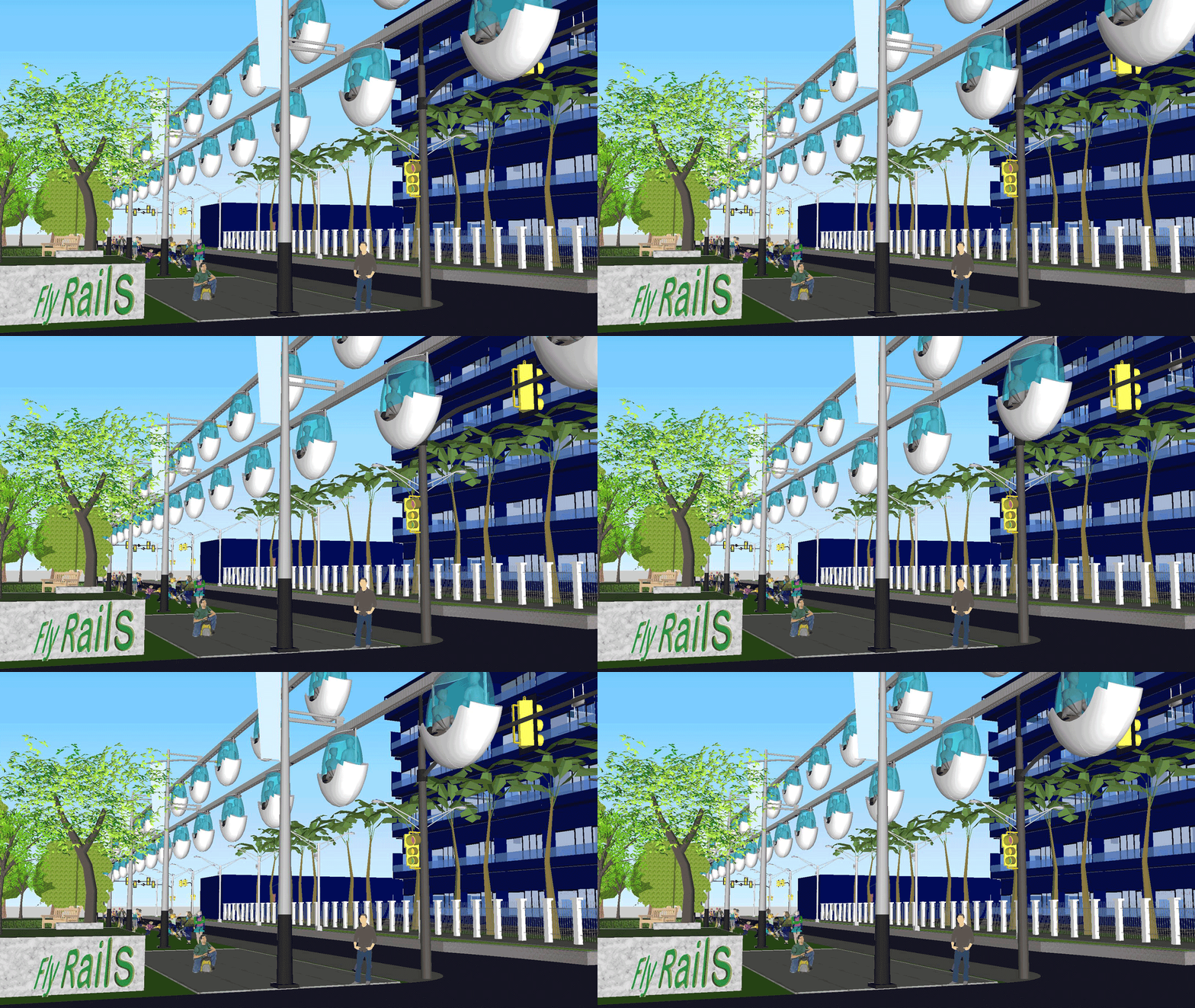
An Eco-friendly, Aesthetic, Affordable People Mover

Mega-Transportation Projects are Slow, Inadequate, and Expensive
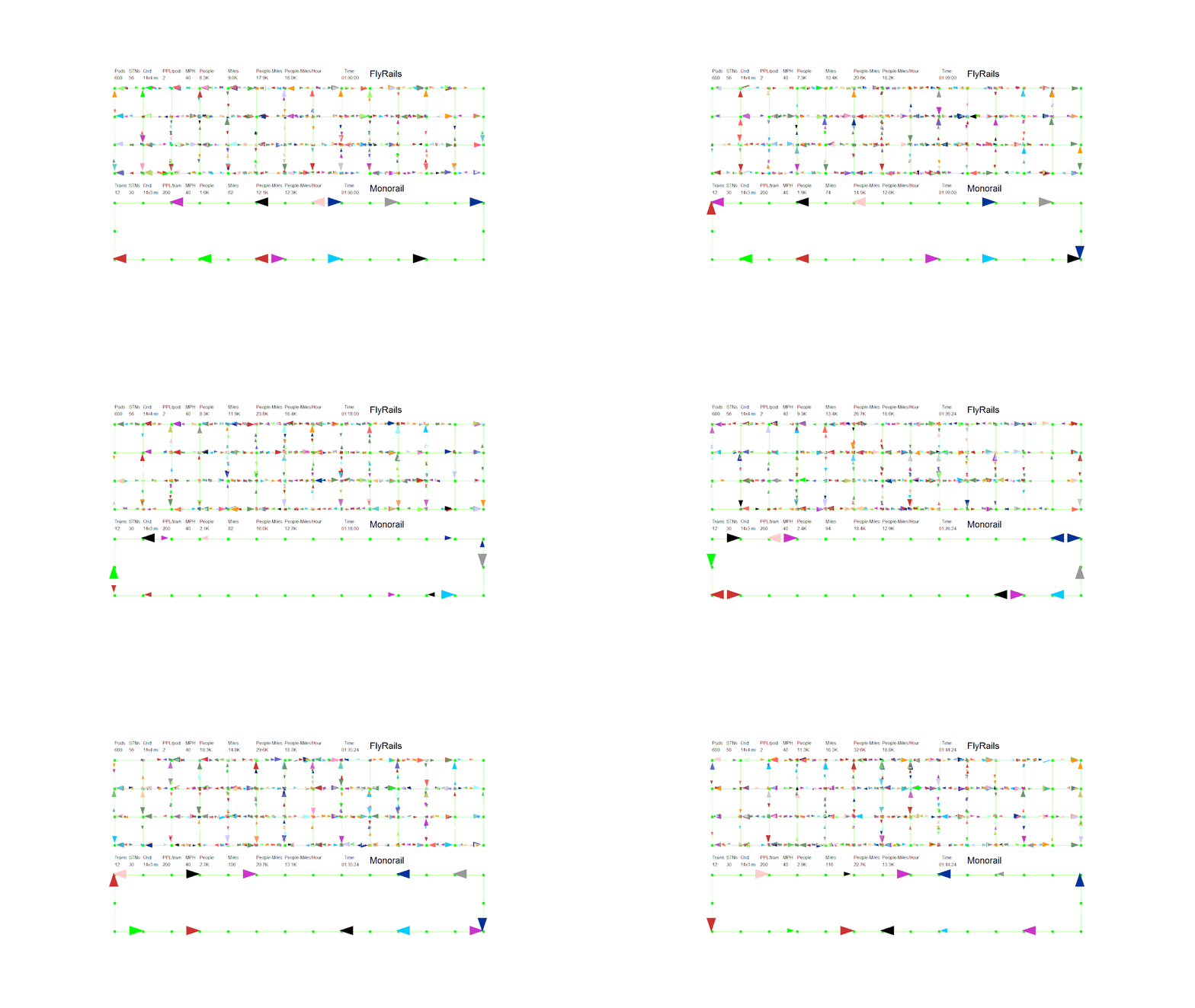
Currently cities provide poor commute choices for urbanites. New transportation projects focus on monorail systems which are slow, inadequate, inefficient, and expensive. Typically these monorails move 200-300 people from station to station every 5 to 10 minutes. Monorail trains move from one end of a line to the other on one rail while other trains move in the opposite direction on another parallel rail each of them stopping every couple kilometers for a minute at each station. Very much like 19th century train technology, just more stops on much more expensive elevated rails.
A 10 station commute of 20 km will include:
Even with a peak speed of 80 kph this 20 km commute will take 50 minutes. An average of 25 kph. Most bicyclists can ride a bike that fast! (If you have to do a transfer add an additional 10 minutes.)
But that's just the beginning. A commuter must get to the starting station then from the destination station to the final destination. Because the infrastructure (rails and stations) is so expensive most large cities can only afford one line going North-South and another going East-West. Most commuters will choose to use dirty, unsafe, and super-slow ground transportation because the stations are too far away. Paying for a tuk-tuk, motorcycle taxi, or taxi to get to a station plus the cost of the monorail is too much.
Obviously people living in one of the corners of a large city will spend more time and money getting to the station than riding the monorail. Commuters lucky enough to live near a station are the exception; however, they may not be so lucky finding a destination station close to their commute destination. The monorail may average 25 kph but typically the total average commute speed might be a mere 15 kph.
What about the efficiency of 200-person monorails systems? While monorails are aerodynamic and use low-polluting efficient electric motors, the trains are spending most of their energy starting and stopping; basically overcoming inertia. Absurdly, most of the 200 people aboard the vehicles at any particular stop don't want to stop! 19th century train technology so good that we must keep doing it?
Four Critical problems:
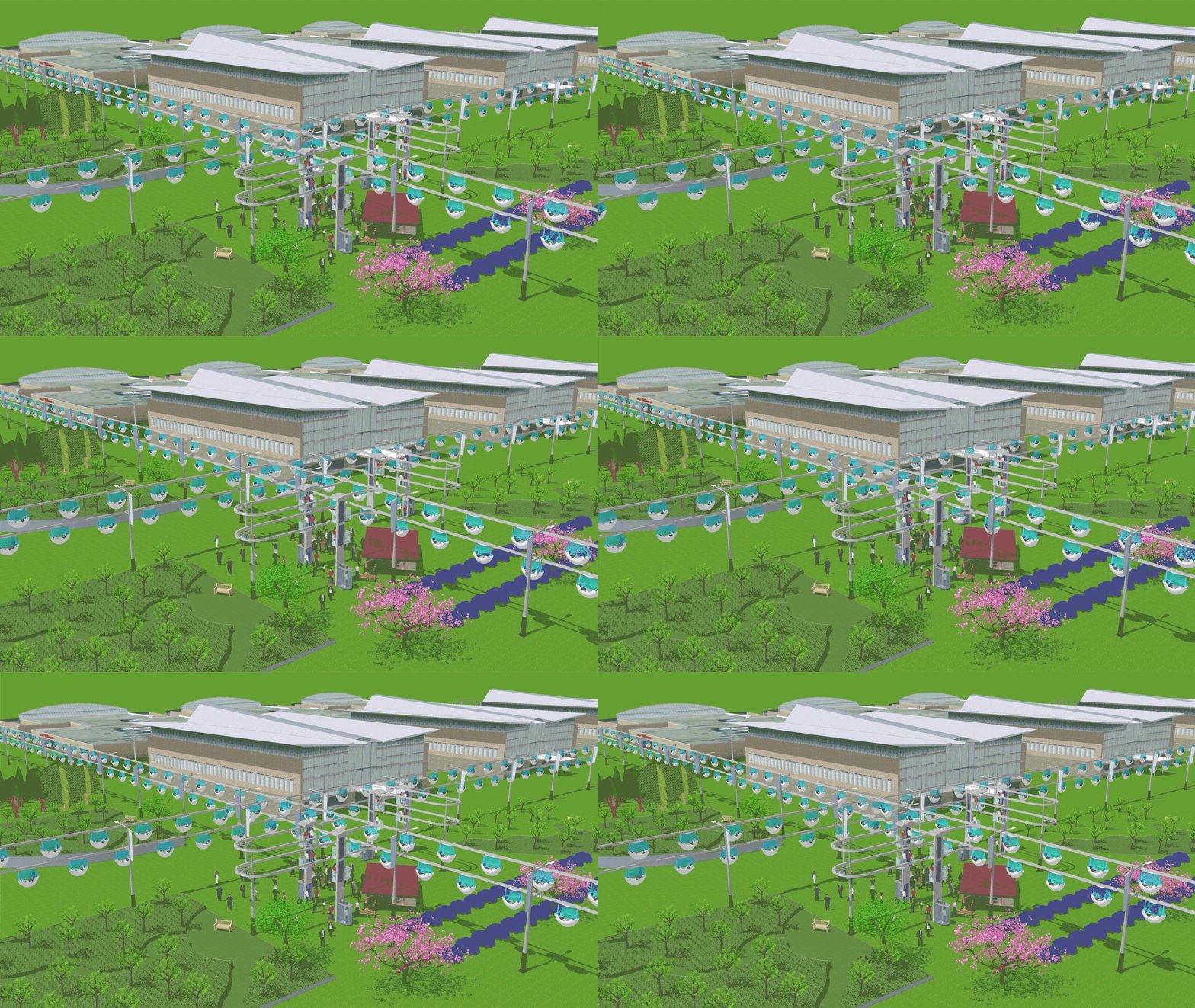
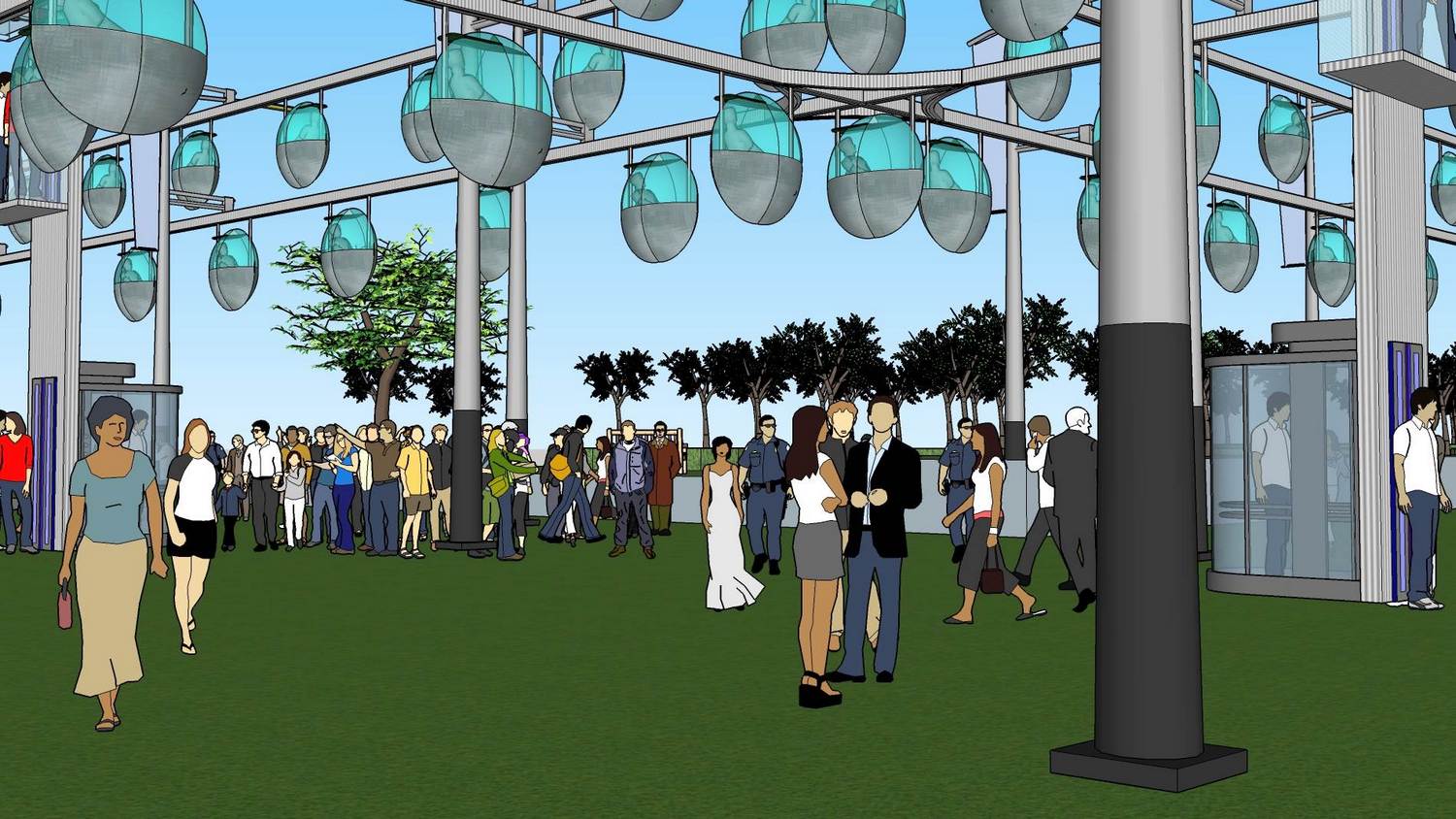
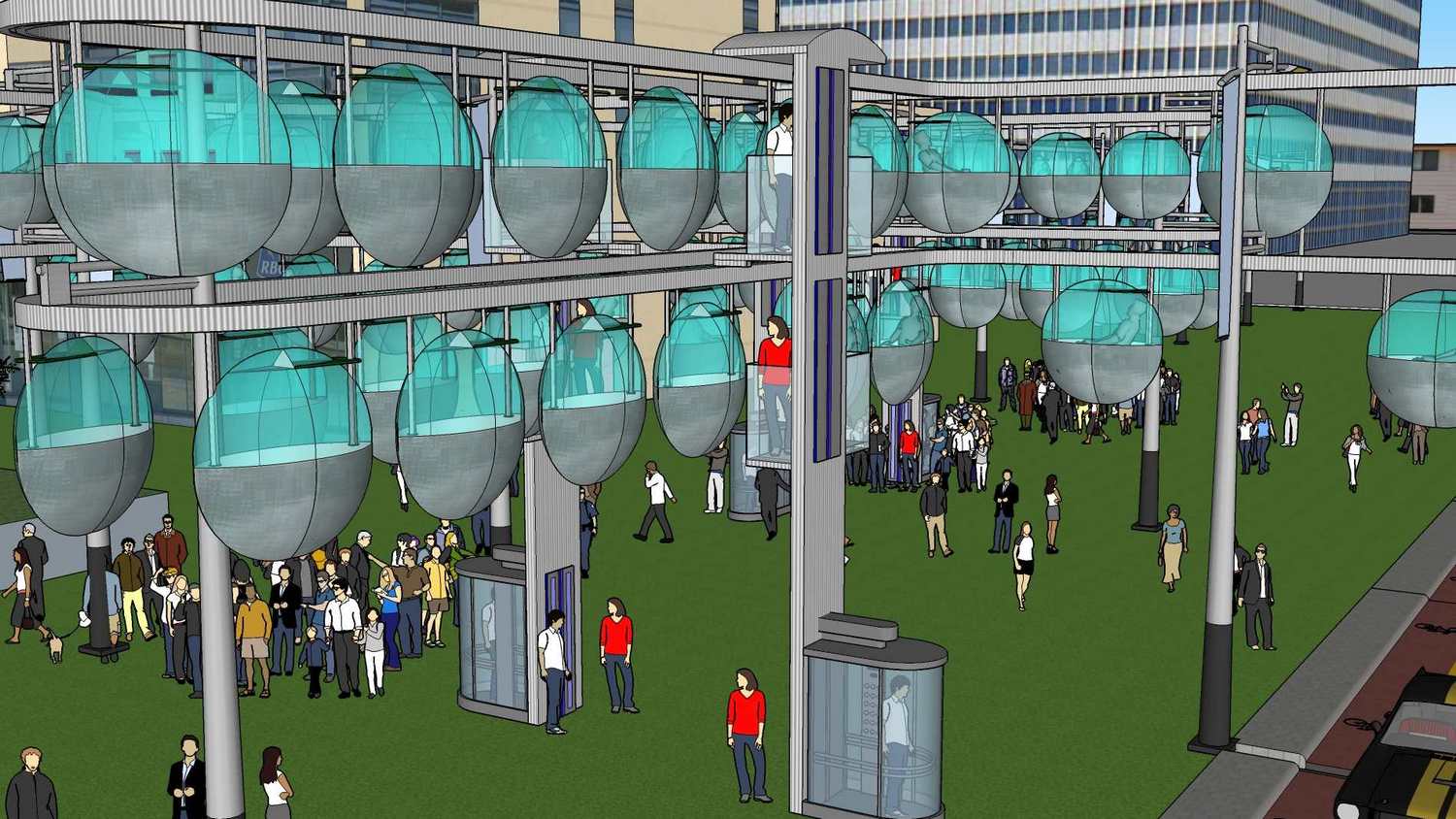
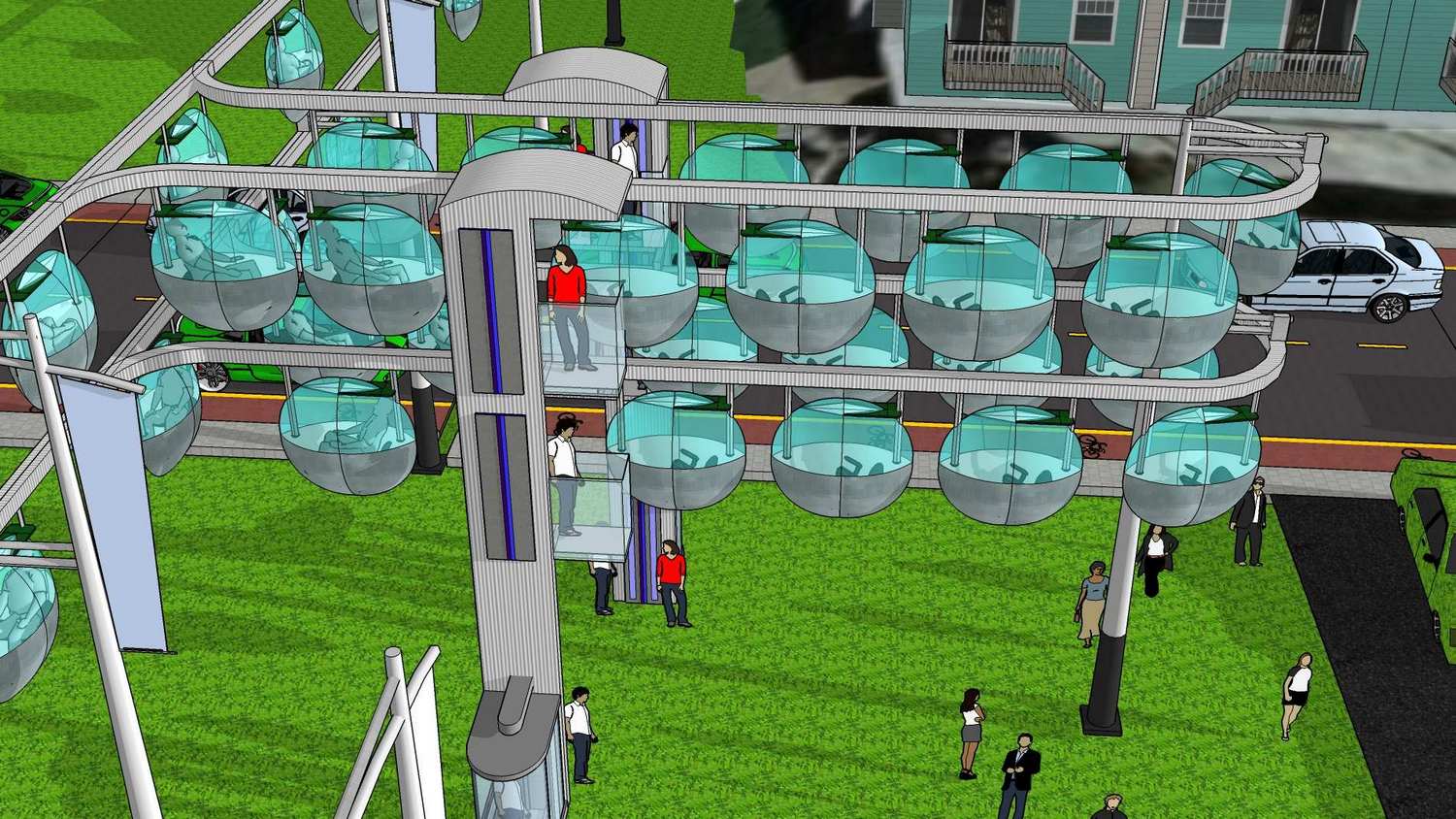
The Fly Rails Solution Provides:
How Fly Rails provides a 1 Start, 1 Stop Affordable Infrastructure Solution:
Industries in developing countries provide dirty ground transportation
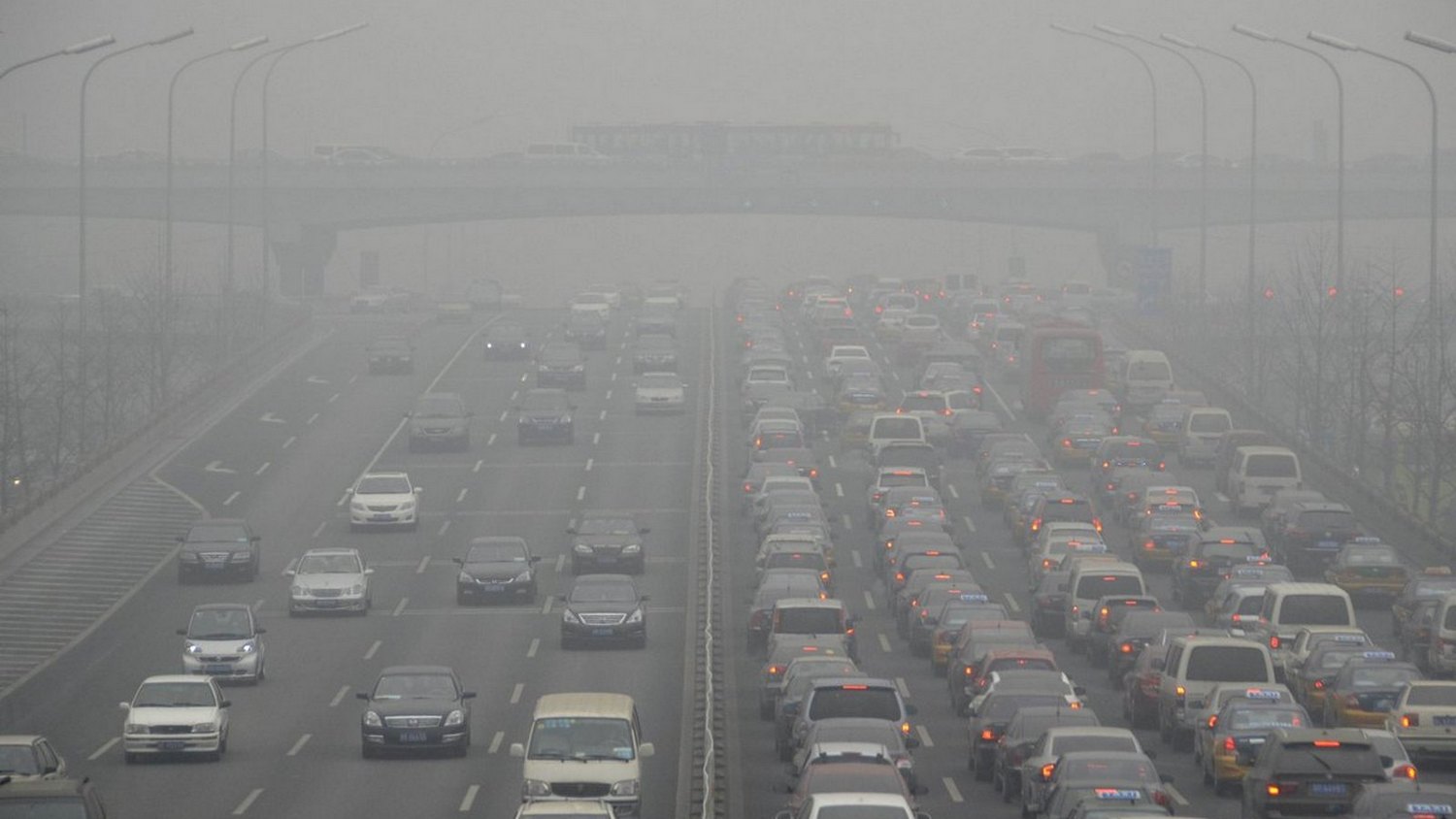
I work for an American Company in a developing nation: Thailand. The company I work for is the largest American employer in Thailand. The company leases 250 diesel buses to transport 20,000 employees in two shifts everyday. It makes sense: 40 employees (40*250=10,000) per bus and 99% of the employees use the provided bus. Transportation is an important part of a company's benefit package. Without it most shift workers would work elsewhere (no possibility of individual cars; employees make $10/day). Companies like mine are located just outside of Bangkok in Industrial Parks typically 50 to 60 km's from downtown. Because of these buses the pollution is worse in the Industrial Parks than it is in downtown Bangkok.
At this time the most efficient and least polluting public transportation is a monorail and subway system that runs a 20 km loop around downtown. Because of the cost there is no way this alternative could extend to the industrial parks some 60 km's away. My company and others would jump at a chance to rid themselves of these expensive, polluting, slow, dangerous, and unpredictable buses. The Fly Rails alternative would provide affordable, clean, fast, safe, and predictable transportation for all employees.


For more information:
In Thailand call: 66(0)7-267-2002
Or Email: mike@redbicycle.org